Last updated November 21, 2026
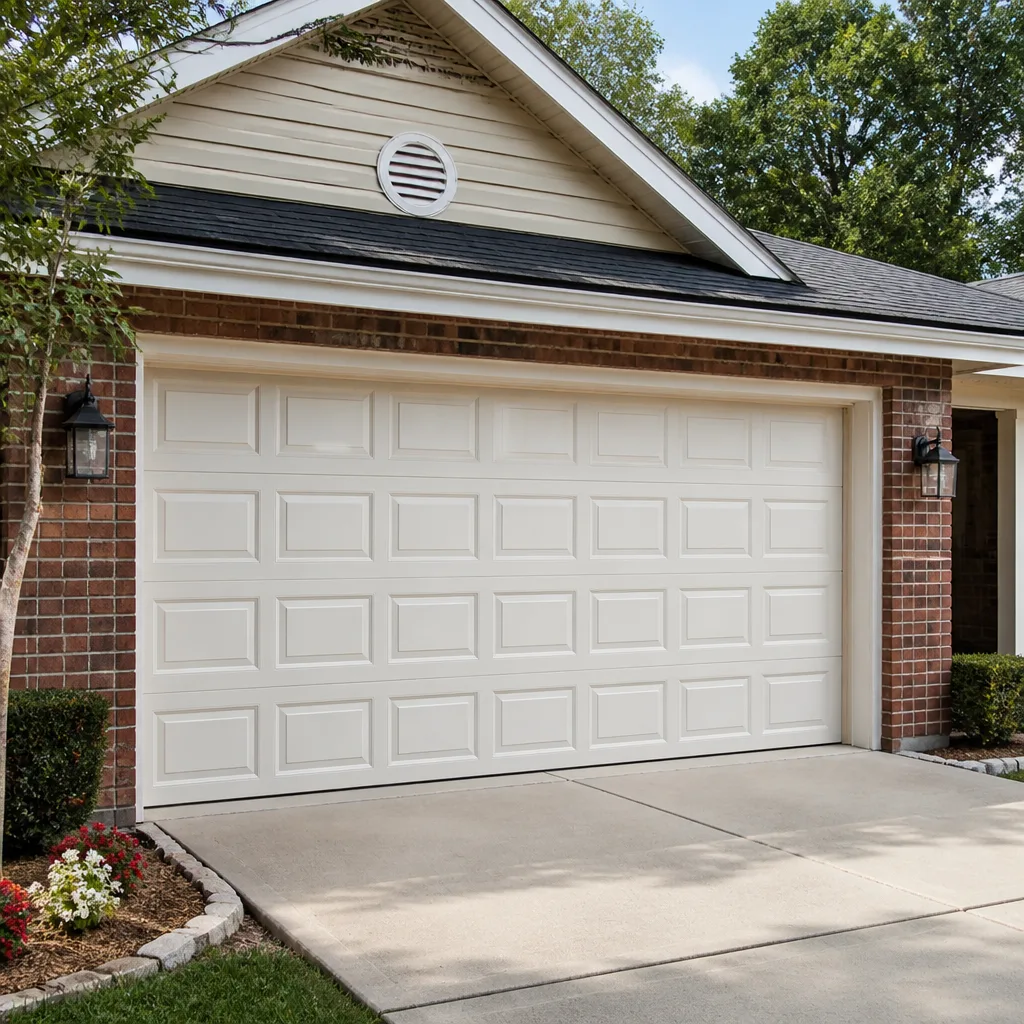 Raised-panel steel
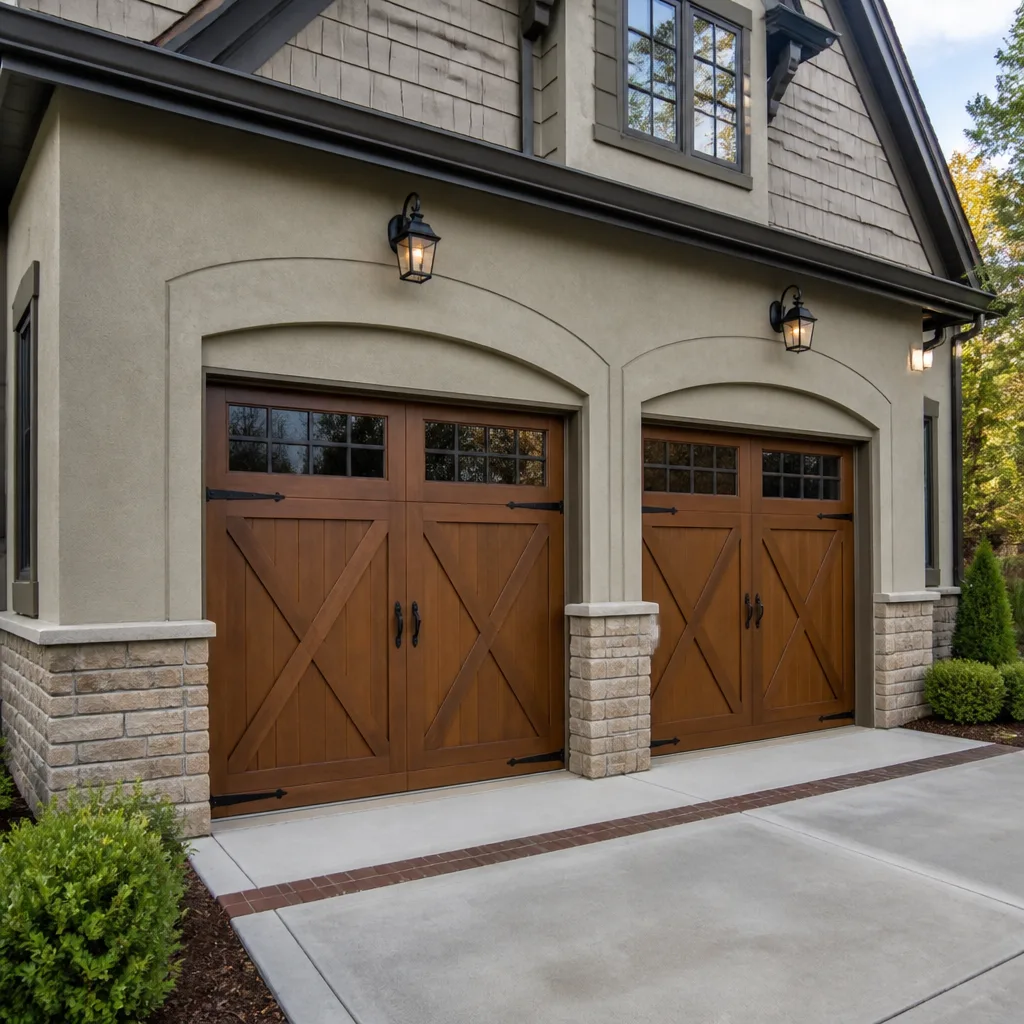 Carriage house
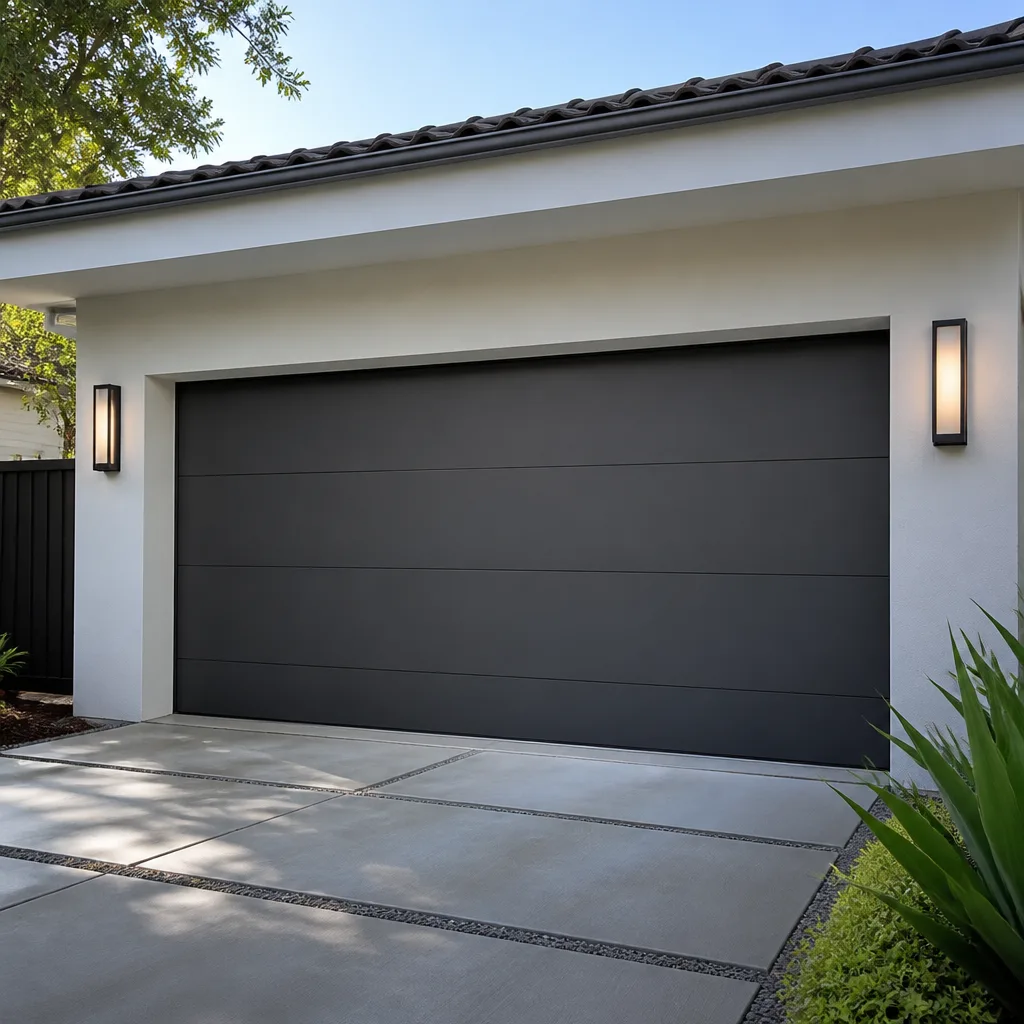 Modern flush
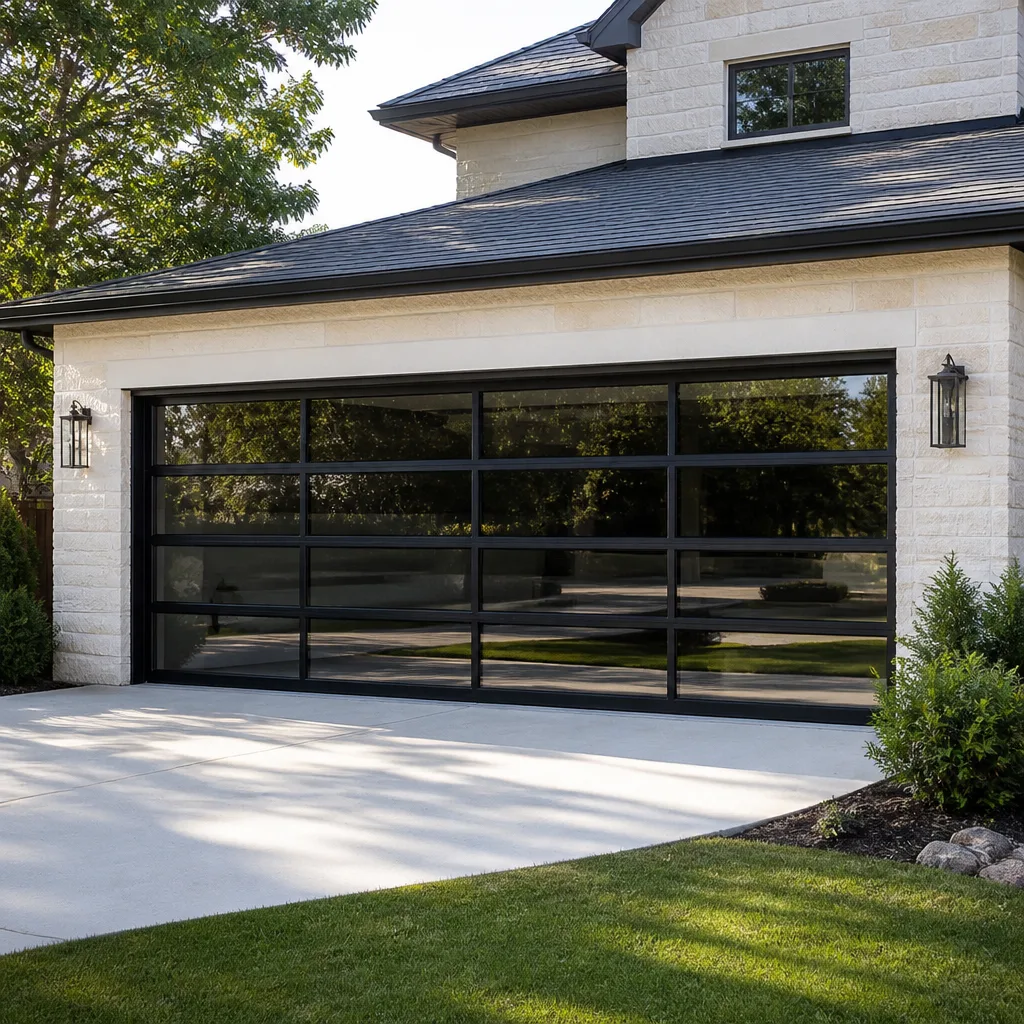 Full-view glass
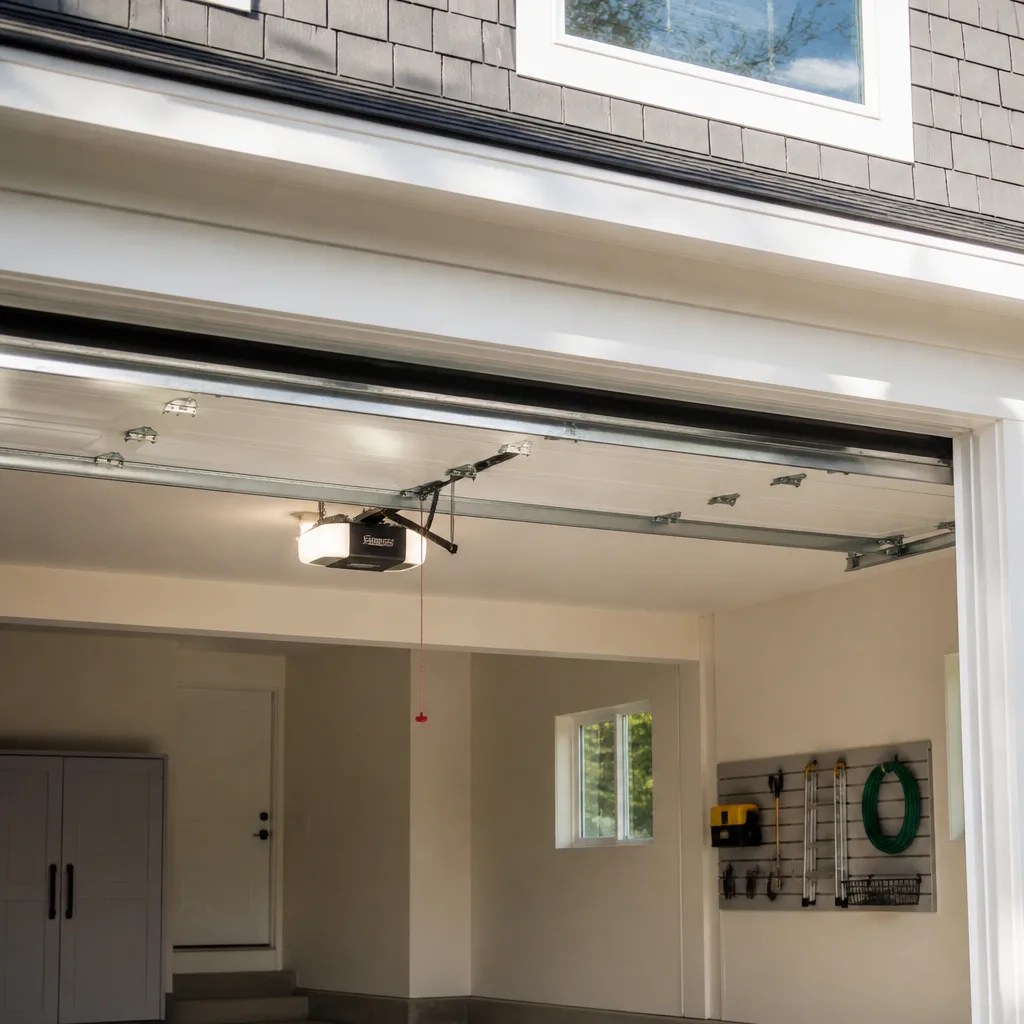 LiftMaster openers
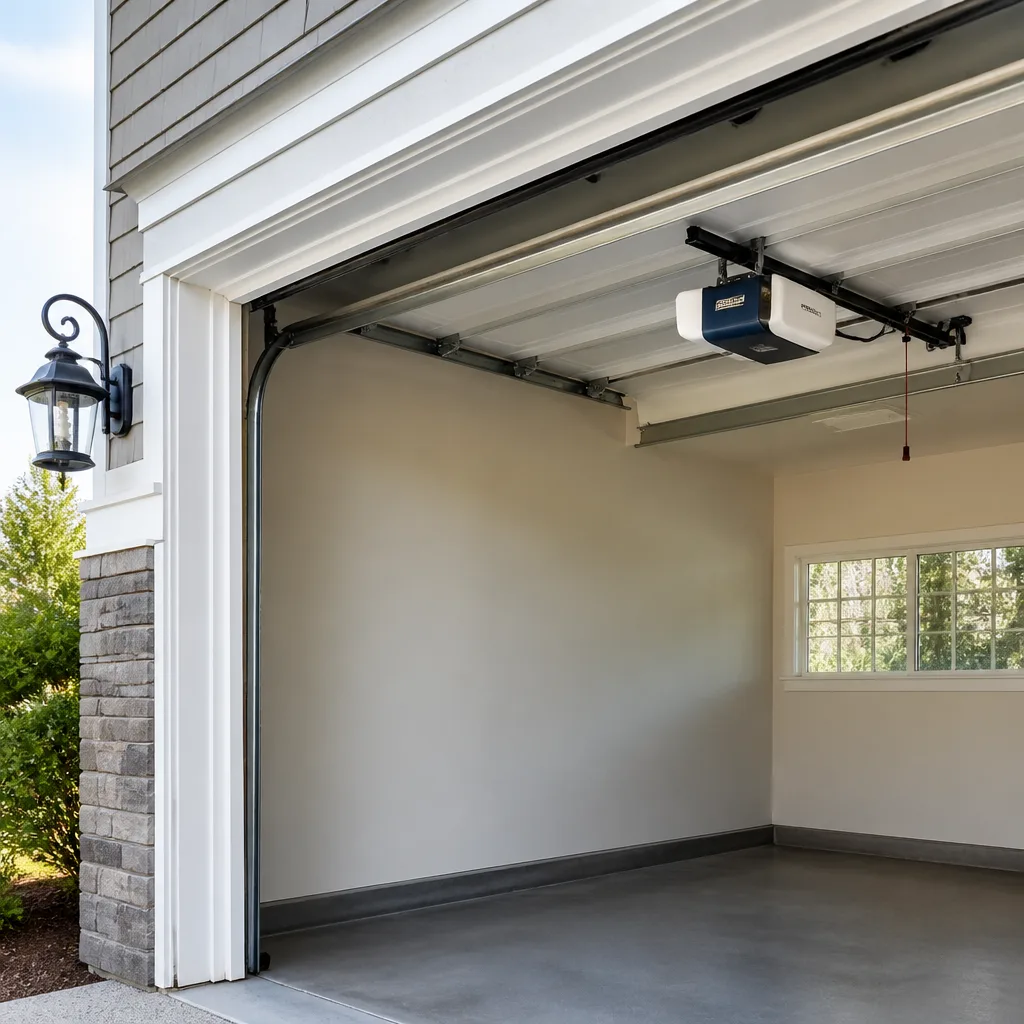 Chamberlain openers
Full 25-point door and opener safety check with every visit - springs, cables, rollers, tracks, and your LiftMaster or Chamberlain opener included
You get a price before we start. It does not change when the pro arrives.
Get your free estimateGarage Door Warning Signs: A Brookline Homeowner’s Reference Guide
A garage door that shakes on the way down is not the same problem as a garage door that shakes on the way up. Most homeowners treat every strange noise and wobble the same way, which is why so many calls to a repair company turn out to be either far more urgent than the caller expected or far less urgent than they feared. The direction, the timing, and the sound of a symptom each point to a different component, and one of those categories needs attention today. In this guide we’ll walk through the full symptom-to-cause map, flag the three signs that mean stop using the door entirely, explain what a failing opener looks like versus a failing door, and show how a few seconds of photo documentation protects you before any technician arrives. If you’re in Brookline and something about your door has started feeling off, this is the reference we’d hand you in person.
Quick Answer
Garage door warning signs fall into three urgency tiers: cosmetic issues you can monitor, mechanical issues worth a scheduled visit, and safety-critical issues (a door that won’t stay level, any visible cable damage, or a door that reverses on its own) that mean stop operating the door and call a specialist. In Brookline, the most common early warning signs are jerking motion, uneven descent, and grinding or popping sounds, all of which point to specific components rather than to the door as a whole. Triaging correctly – not just spotting problems – is the skill that saves homeowners both money and risk.
Styles & brands we work with
- Raised-panel steel
- Carriage house
- Modern flush
- Full-view glass
- LiftMaster openers
- Chamberlain openers
Table of Contents
- Symptom-to-Cause: What Each Sign Actually Means
- The Three Signs That Mean Stop Using the Door
- Is It the Opener or the Door? How to Tell
- Single-Spring vs. Multi-Spring Systems
- Brookline Climate and the Seasonal Wear Cycle
- The Documentation Habit That Prevents Overpaying
- A Simple Triage Workflow for Any New Symptom
- Common Mistakes to Avoid
Symptom-to-Cause: What Each Sign Actually Means
Garage doors talk. The sounds, movement patterns, and visual changes you notice are each tied to a specific set of components, and narrowing the cause before a technician is on-site speeds up diagnosis and helps you understand any quote you get. Here’s the matrix we use in the field when a Brookline homeowner describes a symptom over the phone.
Sounds
- Grinding usually points to worn rollers, dry hinges, or a torsion spring that has lost tension and is dragging on the shaft. Grinding while the door travels usually lives in the roller and track interface.
- Popping is classic spring noise. A torsion spring under load has two coils that can bind and release, and a popping sound during travel often means the spring is nearing the end of its service life. It can also come from a loose hinge plate.
- Squealing is almost always friction – bearings, rollers, or the opener’s drive screw. It’s rarely dangerous but is a strong signal that lubrication has been skipped for too long.
- Silence where there had been sound is worth attention. An opener that engages with no door movement, or a door that stops halfway with no motor noise, points to a stripped gear or a snapped spring.
Movement
- Jerking during travel on the way up means the opener is fighting a load – typically spring tension or a binding track. On the way down, jerking more often means a track or roller alignment problem, because gravity is helping and no spring resistance is involved.
- Slow descent is a warning sign of a weak or partly broken spring. The opener is doing work the spring should be carrying.
- One-sided sag is nearly always a bent track on the sagging side, a broken roller, or a loose hinge. Any sideways visual sag is also a potential pinch risk.
Appearance
- Visible cable slack is a stop-sign symptom. Cables are under extreme spring-loaded tension and should never hang loose.
- Bent track is usually low-impact damage from a bumped vehicle, but even a small bend can force the rollers off line and unbalance the whole door.
- Cracked panel on wood or composite doors is often a moisture issue, while cracked steel panels usually signal impact. A cracked bottom section can bind on the floor.
If your symptom is undeniably mechanical – the door travels but the opener has no involvement – our garage door repair service is where we’d start. If the door behaves itself but the opener is slow, unresponsive, or randomly reversing, that’s an garage door opener repair question instead.
The Three Signs That Mean Stop Using the Door
Three specific warning signs cross the line from “schedule a visit” to “do not operate this door again until a technician has assessed it.” They are described below with enough specificity that you can recognize them without ambiguity.
- The door will not stay level when you raise it manually. Disconnect the opener (the pull cord with the red handle), lift the door about halfway by hand, and let go gently. A healthy door stays where you put it. A door that drifts down or slams shut means the spring system has failed or is dangerously loose, and the door is being held by the opener alone. Stop here.
- Any visible damage to a torsion cable. Torsion cables live on either side of the door’s shaft, above the top section, running down to the bottom corners. If a cable looks frayed, has slack in the middle, has slipped off a drum at the top, or sits unspooled against a track, do not operate the door. This is a spring-loaded system under serious tension and should not be touched.
- The door reverses or drops without being commanded to. If the door starts closing and reverses on its own, or starts falling without motor input, that’s either a safety sensor being triggered by something serious or a spring that has failed mid-travel. It’s also the exact scenario where an unbalanced door is most dangerous to someone standing underneath it.
Springs and cables are the most hazardous components on any garage door. We handle them as a named service with dedicated tools and protocols, and we don’t recommend a DIY attempt even on a door that seems to be cooperating. Springs are dangerous – leave it to a pro. That advice applies whether the door is a basic single-panel model or a modern multi-section Clopay or Amarr door with all the insulation and finish that implies.
If you’re seeing any of the three critical signs, call (888) 478-5598 so we can help you get an assessment scheduled. We won’t tell you to keep operating a door that’s in that state.
Is It the Opener or the Door? How to Tell
Nearly every “my opener is failing” call we take in Brookline starts the same way: something changed and the opener is the most obvious culprit. But the opener is often just reporting a mechanical fault it can’t overcome, not causing the fault. Here’s how to tell the difference before you spend money on the wrong fix.
Signs the opener itself is failing
- Delayed response when you press the remote or wall button, but the door then moves normally and smoothly
- Random reversal with no obstruction and a clean safety sensor lens
- The opener runs but the trolley doesn’t engage the door (often a stripped gear on older Craftsman and Genie units)
- Remote range has dropped significantly, and a fresh battery doesn’t help
- The motor housing gets noticeably warm or the unit trips a breaker
Signs the door is causing the problem
- The opener strains audibly during part of the travel, then relaxes when the door reaches a different position
- The door jerks or binds in the same spot every cycle
- The motor runs cleanly but the door moves unevenly, tilts, or drags
- The opener reverses only when the door is going down at a particular section
The manual-release test from the previous section is the fastest way to isolate the two. Disconnect the opener and lift the door by hand. If the door moves smoothly and stays where you place it, the door is healthy and the problem is in the opener. If the door is heavy, grindy, or won’t hold position, the door is the problem – even if replacing the opener would seem like the obvious fix.
Our technicians work on LiftMaster, Chamberlain, Genie, Craftsman, and other major opener brands, and have up to 12 years of experience with both modern Wi-Fi-enabled units and older mechanical systems. Your opener, our specialty – and if the door is the real culprit, we’ll tell you that instead of selling you an opener you don’t need.
Single-Spring vs. Multi-Spring Systems
A broken spring does not look the same on every door. That one fact trips up a lot of Brookline homeowners who compared notes with a neighbor and assumed they had the same setup. Here’s how to know which system you have and what failure looks like on each.
Single-spring systems
One torsion spring runs the full width of the shaft above the door. A single-spring door is usually a smaller, lighter door – often a one-car door or an older steel model. When a single spring breaks, the door becomes heavy and often drops partway immediately. There’s a distinctive bang when it happens, and afterward the door may hang unevenly or refuse to lift at all. Because there’s only one spring, the door loses all spring support at once; there is no partially-working state.
Multi-spring systems
Two or more springs share the load on most double-width doors, and they’re often paired so that a matched set works together. When one spring in a multi-spring setup breaks, the door may still lift, but it will feel heavy, will often tilt to one side, and the opener will strain. That partial function is what tricks people into continuing to use the door. A door with one of two springs broken is unbalanced, and it’s actively damaging the opener every time it cycles.
What this means for your call
- Count the springs on the shaft above the door before you call. Note whether there is one spring or two (or more), and their length.
- If you have a pair and one looks like it has a visible gap between coils, treat the door as unbalanced and stop using it.
- When you call, tell the technician the system type, the door width, and the door material (steel, wood, insulated composite). That gets the right springs on the first visit.
- If you’re considering a new door rather than a repair, note that spring system type is one of the things that changes with a new install – we cover that in our garage door installation guide.
For doors from brands like Wayne Dalton or Clopay, we already know which spring system the factory ships with on each model line, so the call goes faster.
Brookline Climate and the Seasonal Wear Cycle
Brookline’s weather does specific things to garage doors that homeowners in milder climates don’t have to think about. The freeze-thaw cycle in Western Pennsylvania moves the ground under the concrete apron and the driveway slab, and a garage door that was perfectly aligned in October can sit slightly off track by February. You may not see a crack in the slab – you’ll just notice the door scraping or binding at one corner during the winter months.
Cold weather also stiffens the lubricants in the hinges, rollers, and opener drive screw. That stiffness amplifies early warning signs – squealing, sluggish motion, hesitation – that would be easy to miss in mild weather. If a symptom appears only on cold mornings and disappears by midday, that’s usually lubrication and temperature, not a mechanical failure. If it persists all day, it’s a real symptom.
Summer brings its own pattern. Humid stretches swell wood doors and wood-frame tracks, which can cause a wood-panel door to rub where it didn’t in spring. Steel and insulated composite doors from Amarr or Clopay are less affected by humidity but more affected by direct sun if the door faces west – the panel skin expands and contracts, which sometimes loosens panel seams and creates a slight rattle.
A simple seasonal check helps:
- In late fall, before the first deep freeze, lubricate the hinges, rollers, and opener drive screw with a proper garage door lubricant.
- In spring, walk the perimeter of the door and check that both bottom corners sit level to the floor.
- After any significant storm or cold snap, run the door fully up and fully down once and listen.
If you’d rather have a technician do the seasonal look-over, our Brookline garage door service covers both diagnosis and preventive tune-up as part of the same visit.
The Documentation Habit That Prevents Overpaying
Before you call anyone about a garage door problem in Brookline, take 60 seconds to photograph and timestamp what you’re seeing. It is the single most useful thing a homeowner can do to speed up diagnosis and protect against being talked into repairs you don’t need.
Here’s the habit:
- Photograph the symptom, not just the door. If a cable looks slack, photograph the cable at the drum. If a track is bent, photograph the bend with the door in the position where the symptom happens. If a panel is cracked, photograph it straight on and from an angle.
- Photograph with something for scale. A coin, a ruler, or your hand beside the defect gives the technician a real sense of size. A crack that looks dramatic in a close-up may be a 1/8-inch surface mark.
- Record a short video of the door in motion. Capture the door opening and closing at normal speed. The direction of the shake or the point of the travel where the noise happens is diagnostic information you cannot put into words.
- Note the date, time, and conditions. “Jan 12, 9:15 am, 22°F, symptom appeared on opening” tells a technician more than “it started last week.”
- Note what changed. A new opener remote, a power outage, a bumped track from a bike, a heavy snow load, or a recent paint job can each explain a new symptom.
When a technician already has photos, a video, and a time stamp, they can order the right parts on the first visit instead of running a full diagnosis to reach the same conclusion. More importantly, the written estimate you get is grounded in what’s actually wrong with the door – not in what a technician guesses while standing in your driveway. That’s the whole point. A photograph taken before the call is the cheapest protection against upselling you will ever have.
If you’re a property manager handling multiple doors, date-stamped photos per door in a shared folder turn every service visit into a documented record you can reference months later.
A Simple Triage Workflow for Any New Symptom
When something about your garage door changes, use this workflow rather than waiting to see if it gets worse. It takes about five minutes and tells you which of the three urgency tiers you’re in.
- Stop the door. If the symptom appeared while the door was moving, let it finish travel or stop it, then stop using the door until the workflow is complete.
- Do the manual-release test. Disconnect the opener, lift the door to the halfway point, and let go gently. A door that stays put is mechanically healthy. A door that drifts or slams means stop – do not re-engage the opener, call for service.
- Visual sweep of the springs and cables. Look above the top section and down both sides. Any visible slack cable, unspooled drum, or separation in a spring coil means stop.
- Visual sweep of the tracks and rollers. Look down both tracks. A small bend, a chipped roller, or a loose hinge is a scheduled-visit item, not an emergency.
- Opener behavior check. Re-engage the opener (with the door in the down position) and press the wall button. Note delay, strain, reversal, or unusual sounds. That tells you whether the issue is in the opener or the door.
- Document. Take the photos and video from the previous section before you call.
Tier the result:
- Tier 1 – Critically dangerous. Door won’t hold position, cable slack or damage, or the door reverses or drops on its own. Stop using the door and call now.
- Tier 2 – Schedule a repair visit. Uneven motion, a single broken spring on a multi-spring system, a bent track, grinding, popping, or an opener that strains. Call today, schedule soon; don’t keep cycling the door.
- Tier 3 – Monitor. Squealing that responds to lubrication, a minor cosmetic panel crack, or a slight rattle only in cold weather. Address at the next seasonal check, but don’t ignore a symptom that moves to Tier 2.
Common Mistakes to Avoid
- Lubricating a spring. Torsion springs should not be greased; lubrication on a spring surface attracts debris and can mask a spring that’s failing. Lubricate the hinges, rollers, and opener drive, not the springs.
- Ignoring a symptom that only happens on cold mornings. In Brookline, that’s often the earliest signal that a spring or a hinge bearing is starting to weaken. By spring, the symptom may be Tier 2 instead of Tier 3.
- Replacing the opener without testing the door first. If the door binds or is unbalanced, a new opener will fail in the same way. Do the manual-release test before you buy anything.
- Pulling the manual release on a door with a broken spring. The door can drop fast and hard. The manual release is designed to be used when the spring is intact and the door is safely down.
- Ignoring one side of a bowing track. A bow in the track on one side is usually a bumped vehicle; the opposite side is often the door’s natural travel rub. Look at both sides before calling, and note which is bent.
- Running a matched-pair spring replacement with only one new spring. A pair should be replaced as a set so the door stays balanced, and the second spring is not far behind the first. This is the most common upselling complaint we hear, and it’s fully avoidable by calling the pair correctly up front.
- Assuming the opener remote is the problem without checking the wall button. If the wall button also fails, the remote is not the culprit. If the wall button works but the remote doesn’t, it’s a remote or receiver issue.
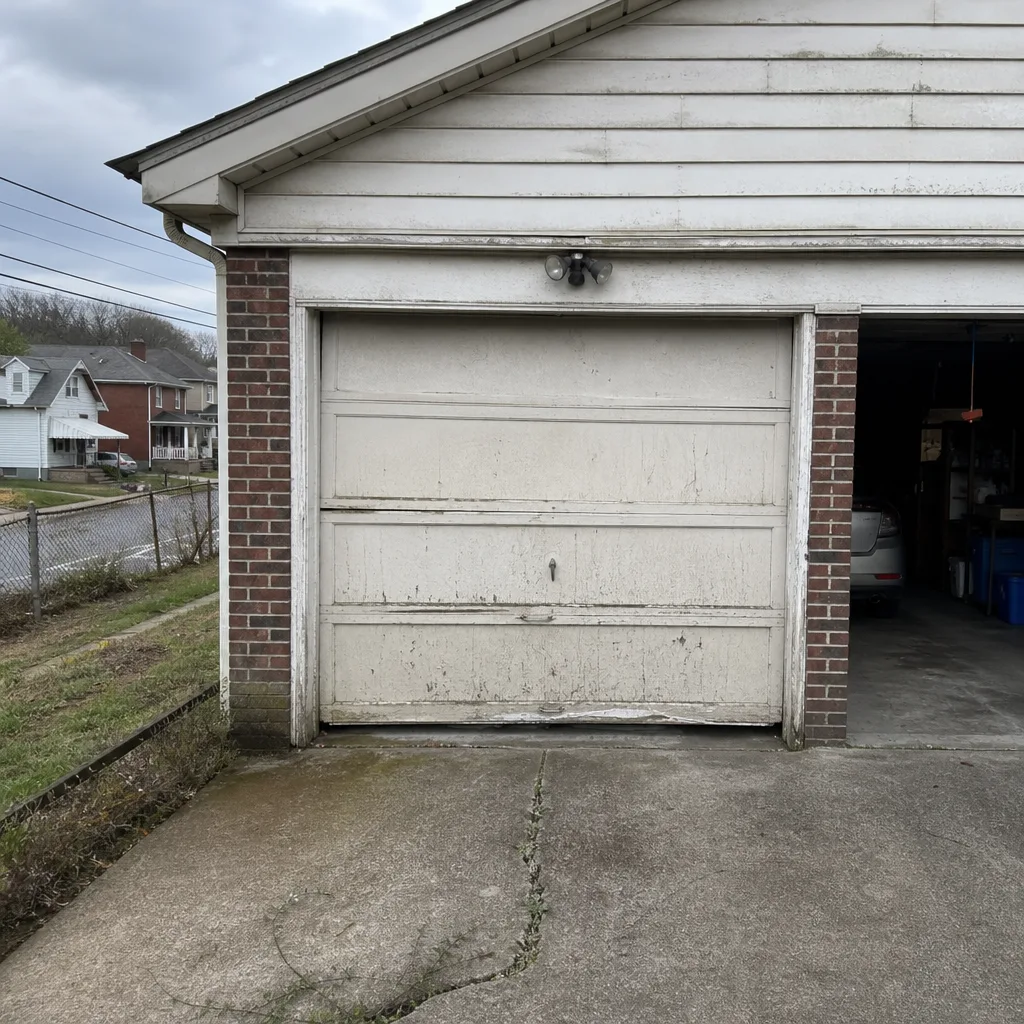
See the difference
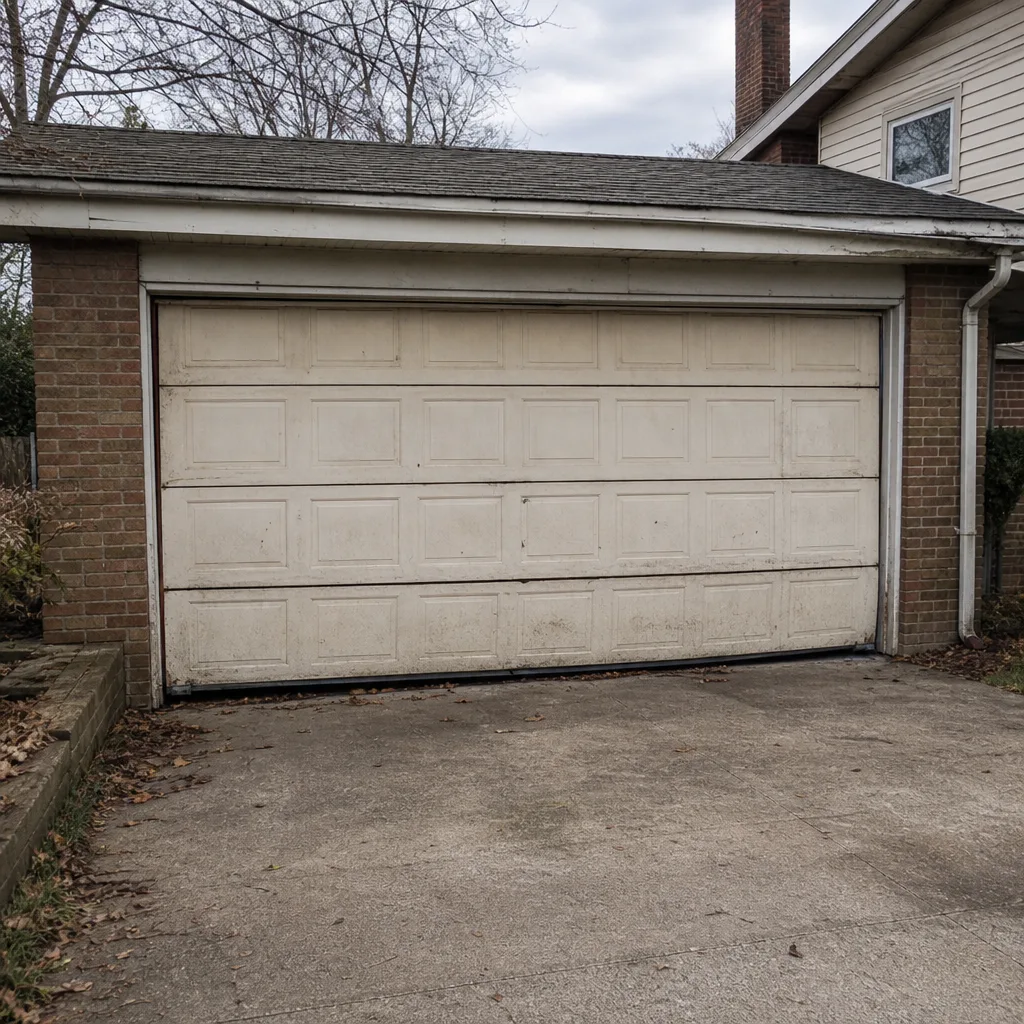 Before
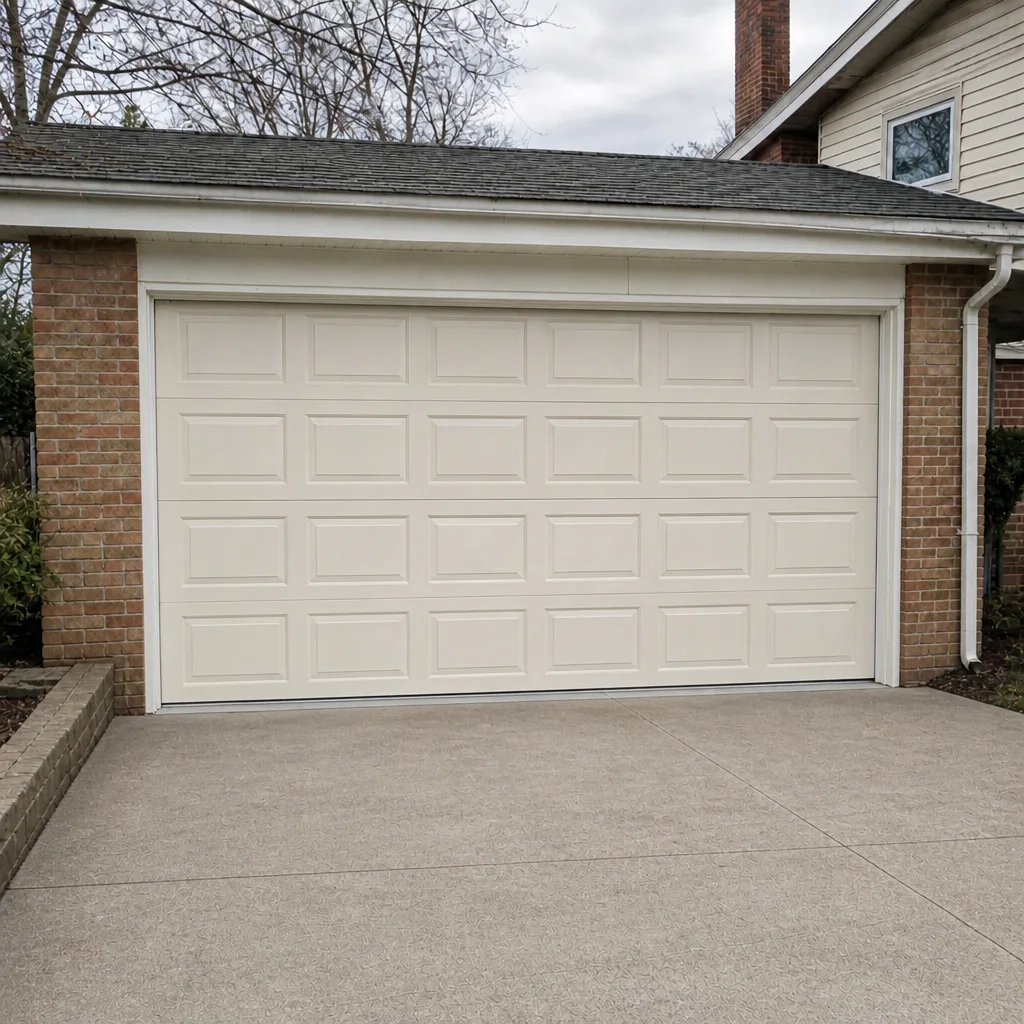 After
 Before
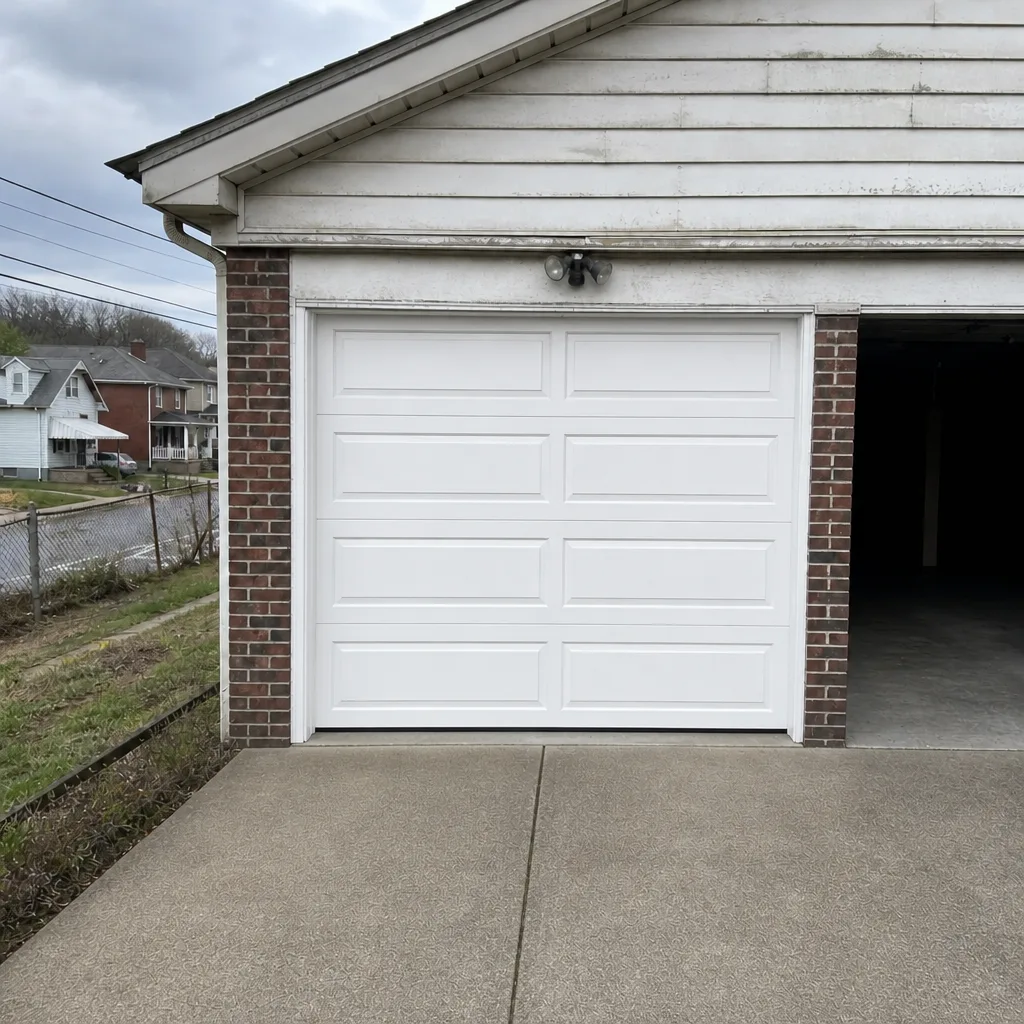 After
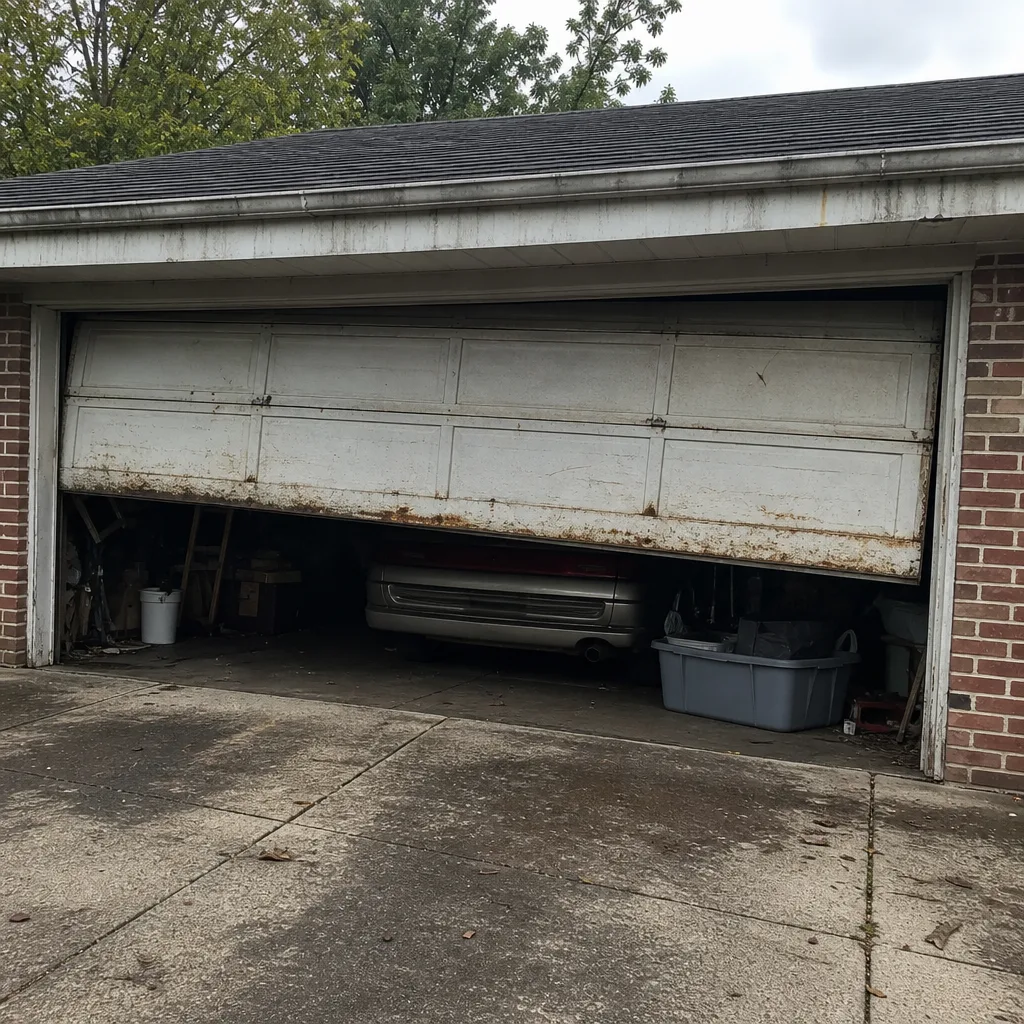 Before
 After
When to Call a Professional
Call a professional for any Tier 1 sign – a door that won’t hold position, a slack or damaged cable, or a door that reverses or drops on its own. Those are spring and cable failures, and they are among the most dangerous repairs on any garage door. Call soon for Tier 2 signs, before the opener takes damage from fighting an unbalanced door. And for Tier 3 signs, we can fold the check into a seasonal tune-up. In Brookline, Brookline Garage Door Repair Pros offers free estimates. Our technicians have up to 12 years of experience, and we handle diagnosis, parts sourcing, and repair in a single visit, so you’re not waiting on a second company to finish the job. Call (888) 478-5598 for a free estimate.
Frequently Asked Questions
A popping sound during door travel is typically the first warning sign of a failing torsion spring. The popping comes from coils binding and releasing under tension, and it’s the earliest symptom before a full break. If the door also feels heavy on the way up, stop using it and have it assessed.
No. A two-spring door with one broken spring is unbalanced and every cycle stresses the opener and the remaining spring. In a Brookline home it’s the most common cause of a second repair call within months. Stop using the door and have the pair replaced together when the technician arrives.
Disconnect the opener using the manual release and lift the door by hand. If the door moves smoothly and stays in position, the opener is the fault. If the door is heavy, binds, or won’t hold, the door is the fault and the opener is just reporting it. Our garage door opener repair team can run this test on-site if you’re unsure.
Grinding usually points to worn rollers, dry hinges, or a spring that has lost tension and is dragging on the shaft. It’s rarely immediately dangerous, but it accelerates wear on the door and opener. A technician can identify the specific component in a single visit.
Not safely, no. A bent track forces the rollers offline and unbalances the door; the door can come off the track under load. Don’t operate the door until a technician has repaired or replaced the affected track section.
Diagnostic visits in the Brookline area are typically free when the repair proceeds, and any repair cost is quoted and agreed before work starts. Spring and cable repairs are priced per spring; a matched pair is roughly twice the cost of a single spring. Call (888) 478-5598 for an exact quote.
The Bottom Line
Garage door warning signs are not all the same, and the most valuable skill in the garage is triage, not spotting. A consistent grinding noise and a door that won’t hold halfway up are on the same spectrum only if you stop using the door in the second case. Sounds point to specific components. Movement in one direction points to specific components. A visual sweep of springs and cables is the fastest safety check you can run. Document the symptom, tier your response, and call for the Tier 1 and Tier 2 items. Our technicians at Brookline Garage Door Repair Pros have up to 12 years of experience across Genie, Clopay, Amarr, Wayne Dalton, LiftMaster, and Chamberlain systems, and we’d rather talk you out of an unnecessary repair than sell you one you don’t need. Call (888) 478-5598 for a free estimate and a same-day assessment when the symptom warrants it.
Written by the team at Brookline Garage Door Repair Pros.